Showing posts with label neutropenia. Show all posts

Monday, July 8, 2013

Another Transition?

After going through four cycles of consolidation chemotherapy, my body has been pretty consistent on how and when it responds. Some parts of the chemo cycle are tougher than others.  This past week was the tough part.  On day 10, I have reliably become neutopenic, that is to say my neutrophil level (a component or type of white blood cell) has fallen below what is required to fight off infections.  I start taking antibiotics, antivirals, and anti-fungals as a preventative.  If I were inpatient, I would get this lovely trifecta intravenously.  I also have a list of other preventive measures I observe until my neutrophils recover sufficiently.  My white blood cells aren’t the only thing that the chemo hits. Around day 14, I come to what is referred to as the nadir – the bottom – and now, all of my white blood cells (not just the neutrophils) are almost undetectable. In addition, the platelets in my blood fall critically low. Without adequate platelets, we stand a good chance of bleeding to death. That’s a pretty thought, isn’t it?
 
My day 14s have been long days at the hospital waiting for the blood bank to provide a bag of platelets. Unlike most intravenous fluids I get, which are clear, platelets look like a yellow goo and thankfully, they can pump the goo in through my PICC line in about 20 minutes. A couple of days later, my hemoglobin and hematocrit drops and I need a blood transfusion, sometimes two units. It’s during this week that my system is recovering and I feel very tired and end up napping more than usual, sometimes twice a day. At the end of the week, something starts to click inside and it feels like I’m coming around again. That translates into next week being a good strong week…and of course, the following week it begins all over again.

Mmmm, good - yellow goo!
 
But…
The plan isn’t to do these chemo cycles interminably. At some point, there’s some adaptation to the medication, but more to the point, these ‘consolidation’ cycles are done only to keep the cancer in remission until a bone marrow donor can be found. Typically, it takes 2 – 7 months to find a donor with the suitable HLA marker matches. What also happened this week was a call from the VA in Seattle requesting more blood tests, but for my mom rather than myself.  I asked where we were in the search and the response brought me to a new intersection of events: we have a prospective donor. So, there’s some additional screening and testing before I’m involved, but it still translates into the possibility of the transplant happening any time now. I should be very clear in saying that this isn't definite. There may be something that hasn't shown up in previous tests and we have to consider the possibility that the donor, who with all the best of intentions when donating a sample, is no longer willing or able to follow through. So, we're still waiting. 
Suffice it to say, that brings to the fore all kinds of new questions and challenges.
Modern medical science has made the bone marrow transplant a procedure that is a pharmacological wonder. One attending hem/onc physician described the procedure just 20 years ago as barbaric, requiring literally hundreds of holes into bones of both donor and recipient that made the operating theater look more like the set of M*A*S*H than a sterile surgical field. Today, the procedure amounts to prepping the donor with a drug that boosts leukocyte production. The leukocytes are then harvested in a procedure that is similar to dialysis.  The donor stem cells are then separated from the leukocytes and set aside for the recipient.  The leukocytes are then returned to the donor. Easy-peasy, lemon squeezy, right? Well, by comparison to the old method, yeah, but the prep for the recipient (that would be me), is a bit on the scary side.
Essentially, what happens is a near lethal dose of chemo / full-body radiation that, according to one person I spoke to at the hospital, takes me to the brink of death and the stem cells grafting to my marrow bring me back. While it sounds very scary—and I harbor no illusions about sailing through it—I’ve only heard of one instance where someone didn’t make it through the procedure and that’s because he gave up. It will be difficult, it will be a long recovery, but it will end. And my fervent hope is that when it does in fact end, I’m still alive and cancer stays firmly in the rear view mirror!
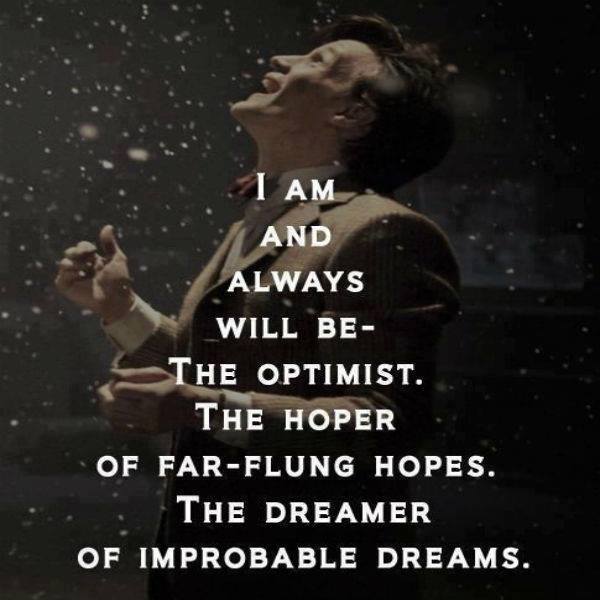
That’s a rather simplistic picture of the process, but it’s not far off according to what I’ve been told and what I’ve read (This series ofarticles is about as succinct as I’ve seen. They are broken up into bite size pieces and take you through start to finish and aren't written at the post-doc level; and this group of statistics is government-generated and pretty direct if you care to read up on the whole thing…especially for the insomniacs out there!). The reality of the situation is pretty sobering as the intersection, my newest transition, approaches. But just like the first phase of my treatment, my outlook is still pretty optimistic and my attitude still contains a healthy dose of humor and sarcasm. Would you expect anything less?
As always, I wish you all the best of health, strength and love.
Today's music from Elton John: "I'm Still Standing," complete with the original video from 1983. Costumes and filming in Cannes, France by the looks of things.
You could never know what it's like
Your blood like winter freezes just like ice
And there's a cold lonely light that shines from you
You'll wind up like the wreck you hide behind that mask you use
And did you think this fool could never win
Well look at me, I'm coming back again
I got a taste of love in a simple way
And if you need to know while I'm still standing you just fade away
Don't you know I'm still standing better than I ever did
Looking like a true survivor, feeling like a little kid
I'm still standing after all this time
Picking up the pieces of my life without you on my mind
I'm still standing yeah yeah yeah
Once I never could hope to win
You starting down the road leaving me again
The threats you made were meant to cut me down
And if our love was just a circus you'd be a clown by now

Thursday, June 6, 2013

Passive-Aggressive

When I got my diagnosis, I felt like I was in that scene from Mel Brooks’s High Anxiety where he’s falling, spinning, screaming. Meanwhile, back in the sterile room, I was speechless, listening to the two hematologists from the Huntsman Cancer Institute explain to me the pathologist’s report and insisting I drop everything and get admitted into the VA Hospital right away. My life was about to start spinning out of control – specifically, my control – for quite some time. And the kicker was, no one really knows how long that period of time is.

“What would you do if this were your son,” my mom asked. The doctor said without any inflection, “Admit him and treat aggressively with chemotherapy immediately.”
Did he really say immediately? Why, yes he did. He repeated the pathologist’s finding that 50% of my bone marrow had some nastiness, something called monoblasts or promonocytes that shouldn’t be there. They should be maturing into full-fledged blood cells, but for some reason, they’re not. And that reason, crime-stoppers, is acute myeloid leukemia and he pretty much laid out the stunningly good news that if I did nothing, I’d be pushin’ up daisies in about 90 days. Be sure to invite this guy to your next party!

That night, I began the odyssey. I remember closing my eyes in the claustrophobic confines of the MRI tube mulling over the new reality that something inside of me that I couldn’t feel, see, taste, hear, or smell was trying to kill me. No sci-fi monster waiting to jump out of my chest, no parasite from an exotic destination vacation, no comeuppance from a life of self-abuse, just an anti-climactic lab report with some really bad numbers. Throughout that hour of solitary confinement, broken up by unpleasantly loud clicks, bangs, and weird noises, I realized that I didn’t even know the questions to ask. The only thing that went through my mind was, “What’s going to happen to me next?” Maybe that was a good thing as I broke the news to my immediate family because I didn't know the answers to the questions they had and I wouldn't have to prolong this awkward and quite frankly very disturbing conversation punctuated by gasps and pregnant pauses. In reality, what came next essentially was getting smart about what this leukemia thing is and what I can do (and not from the Internet which takes you from a commonplace symptom to death in about three easy clicks!). 
During my first week in the hospital, one of the hematologists came in and asked, “How are you doing today?” Trying to be friendy, I jokingly tossed back, “Well, I don’t know, you tell me!” The discussion that followed really drove the point home that he wanted my input, my involvement. He wanted to know the details from my vantage. It was in that moment, I realized that more than my positive attitude, I needed to really be engaged with my own treatment, not just cognizant of what was happening. Paying attention to what the doctors were prescribing, what the nurses were doing procedurally, and how my body was responding and feeling all became vital to my healing process.
I’ve stopped things from happening that weren’t OK, refused unnecessary medication, or prevented additional procedures that caused extra unpleasantries from being inflicted just by paying attention and asking questions. No doctor or nurse has yet to be offended. From what I’ve seen, they’ve used them as teaching points for me and it reinforces that I’m in good hands.  If they don’t know the answer, they’ve stopped what they’re doing and gotten the answer from someone else, but in the end, I’m still being taken care of very well. The bottom line is you know your body and what ‘normal’ should feel like. When you’re under the care of a medical professional, it’s important to communicate in a way that you both understand what’s happening and the nature of the discomfort or feeling you have that’s not quite right.  Here are some examples of things I brought up.

  • My blood sugar showed an alarmingly high reading (>500) when it was normal every other day. I noted that during my first round of chemo, I was given a constant drip of something called D5-half (the “D” stands for dextrose, a form of sugar). This was given at the same time as the chemo drug. While an inpatient, I had my blood drawn every morning for something called CBC (where the types of cells are quantified, essentially) and chemistry. The blood is drawn through my PICC line – the same line where I get the IV and chemo.  If those other drips aren’t stopped, guess what gets mixed with the blood? A couple of days’ lab tests were skewed as a result and I had my fingers unnecessarily pricked on the hour to test my blood sugar, all readings being normal. My questioning the procedure stopped the finger pricking.
  • I was beginning a session of chemo one morning and when the nurse flushed my PICC line, I could hear it in my ears, which was very odd. When the pump started, I could feel it in my chest, something in the many IV pushes I had never happen, so I stopped things right there. It wasn't uncomfortable, but it wasn't right. A quick trip to X-Ray showed the PICC line had diverted away from my heart and into my jugular vein.
  • After three rounds of chemo, my body is pretty consistent in the way it responds. For example, at about day 10, my neutrophil count starts to plummet and by day 12, I’m in a neutropenic condition, meaning my immune system is pretty compromised and I have to take certain precautions. During my first round of chemo, I asked for prophylactic drugs to keep me from coming back through the Emergency Room. The hem/onc fellow at the time called me every day following my lab tests to let me know what my counts were and when to start taking the antibiotics / anti-virals. It worked great; the second round, not so much. I didn’t get the calls from the hem/onc that had rotated in and I ended up with a neutropenic fever that got me admitted for a lovely 4 days. Lesson learned: just take the meds when you know the numbers will tank. The new hem/onc fellow who rotated in agreed with me…and I’m doing very well even though as of yesterday my neutrophil count was a big goose-egg! No fever, feeling great!
    
    This was right after the nurse had
    exerted some serious pressure on
    the hand.  You can see the beginnings
    of what looks like a bruise.
  • 
    Thankfully, it doesn't hurt as the
    nurse said it would. Just a little
    discoloration.
    This Monday, I asked to get a blood type and screen because on day 14 of the chemo cycle my platelet count falls to the floor and without sufficient platelets, you have this nasty tendency to bleed. My request was politely declined and as I was driving home, I got a call from the physician’s assistant I’ve been working with to come back for a – yes, you guessed it – blood type and screen because I’m critically low on platelets (4k/μL – normal is 150k-450k/μL). So, as instructed, I went to the lab to get it drawn. The lab folks are pretty damned good at what they do and have a way of keeping the needles from hurting.  I don’t know how they do it, but they do! The first stick didn’t work. My vein collapsed around the needle apparently. The second stick went in my left hand and he was able to get the sample. On my way home, I felt an itch in that hand and looked down and saw the top of my hand where the sample was drawn swollen about the size of a golf ball. It was really quite amazing. So, at the very place I had taken a U-turn to go back the first time, I made yet another U-turn and went back to the ward and asked, “Is this serious or will it go down by itself?” The nurse’s gasp said it all.  She escorted me to a chair rather quickly and put all her weight on the hand to stop the bleeding. I won’t say, “I told you so, but…” Here are some before and after pictures. I had the presence of mind to come back to the hospital, but I didn’t get a chance to take a picture of the swollen hand.
My point in these examples is not to accuse anyone. We all make mistakes and none of these are really serious even though it did cause me some discomfort and inconvenience. It just drives the point home that regardless of how small the procedure, no matter how trivial the detail, I have to pay attention and if I don’t understand something, I should ask.  I have to manage my care because it’s my body and it’s my life; and I’m responsible for it and I have others available if I'm not coherent to do the same for me. I trust the doctors and nurses to do their job of course, but I have to work with them to fully bring about my healing.

Note that I use the word healing rather than treatment. That’s because I see this whole adventure as more than something happening to me.  It’s beyond restoration to a previous state.  We’ll get there, of course, but the medical aspect of cancer treatment is only part of the big picture. And that’s where my involvement, as the patient, is critical.

You see, this isn’t happening to me although technically that is the case.  Something this big is transformational and it requires participation, my participation. I can’t be passive, but with the same urgency that the doctor who sat across from me insisting I be admitted that night, I have to be aggressive in my own healing.
Be well, stay strong, and much love to you all.

Today’s music – Fix You by Coldplay
When you try your best but you don't succeed
When you get what you want but not what you need
When you feel so tired but you can't sleep
Stuck in reverse
And the tears come streaming down your face
When you lose something you can't replace
When you love someone but it goes to waste
Could it be worse?


Lights will guide you home
And ignite your bones
And I will try to fix you
And high up above or down below
When you're too in love to let it go
But if you never try you'll never know
Just what you're worth


Lights will guide you home
And ignite your bones
And I will try to fix you


Tears stream down your face
When you lose something you cannot replace
Tears stream down your face
And I

Tears stream down your face
I promise you I will learn from my mistakes
Tears stream down your face
And I


Lights will guide you home
And ignite your bones
And I will try to fix you